Tanzanite as a December Birthstone: How It Joined the List
Tanzanite became a December birthstone in October 2002, when AGTA added it alongside turquoise and zircon. The history, the other December stones and care.
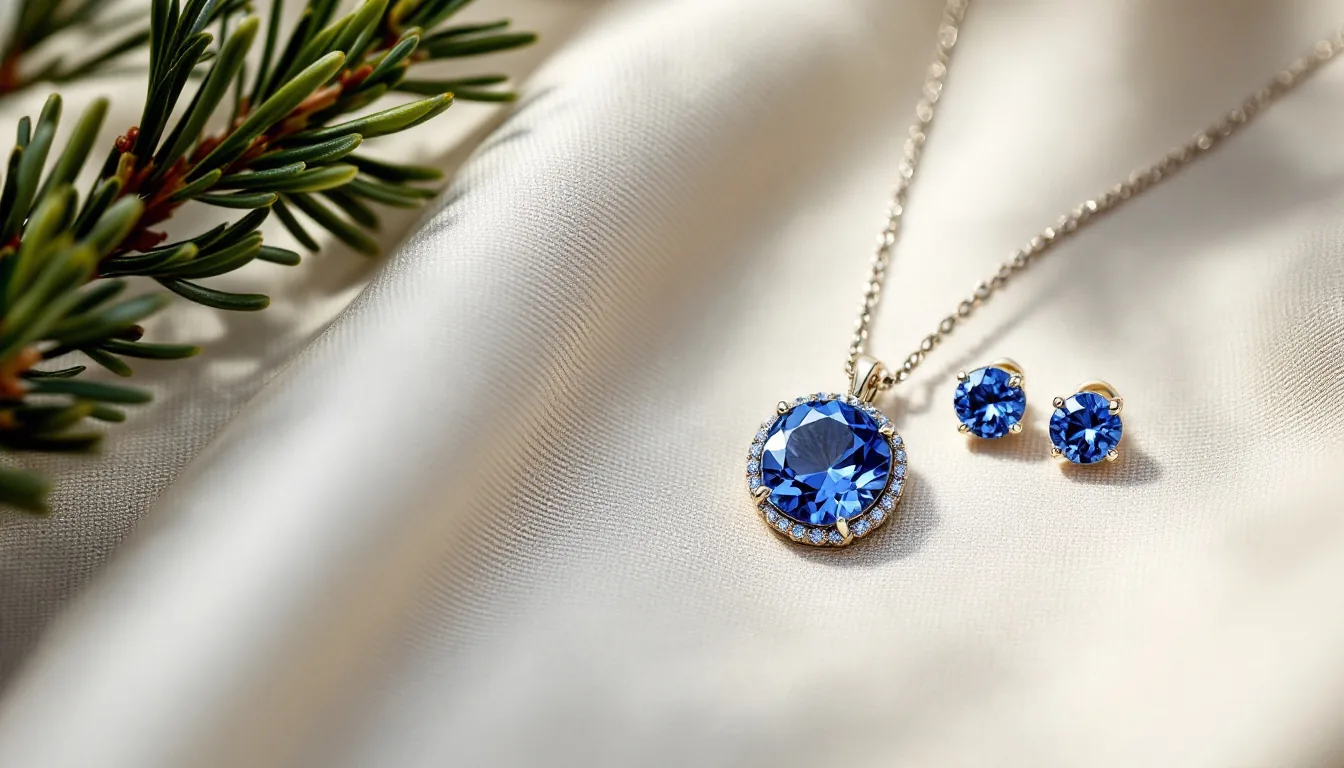
Tanzanite became a December birthstone on October 30, 2002, when the American Gem Trade Association (AGTA) announced it as an addition to the month’s traditional stones, turquoise and zircon. Jewelers of America, the American Gem Society, GIA and the International Colored Gemstone Association endorsed the change. It was the first addition to the modern American list in half a century, and it came just 35 years after the gem was discovered.
A gem discovered in 1967
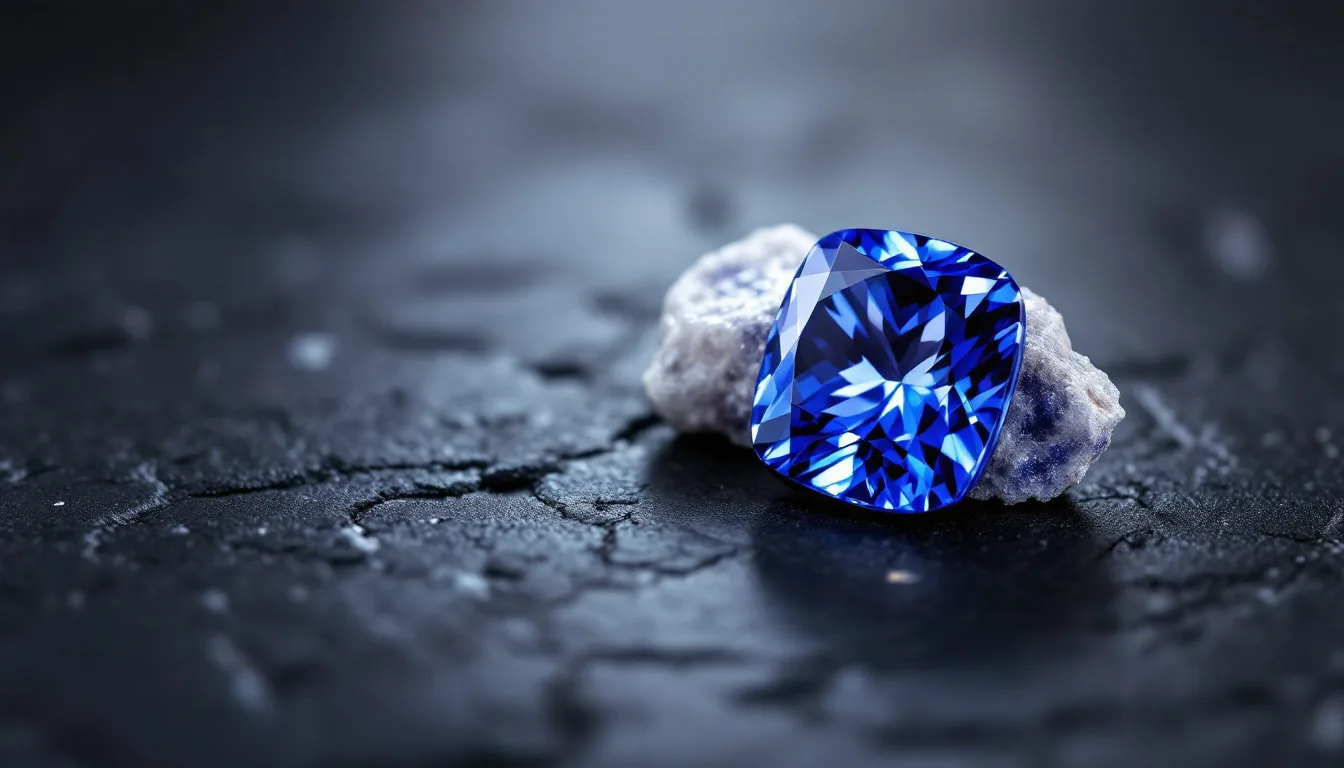
Tanzanite is a blue to violet variety of the mineral zoisite. According to GIA, it was found in 1967 in northern Tanzania, when a Maasai tribesman alerted a prospector named Manuel d’Souza, who registered four mining claims. Within a short time some 90 more claims appeared in the same 20-square-mile area. The deposit, in the Merelani Hills, remains the only place where tanzanite is mined commercially.
Tiffany & Co. turned the find into a market. The company’s own history, in a Tiffany press document, says that a year after the discovery, cut stones were shown to Henry B. Platt, a Tiffany vice president and a great-great-great-grandson of founder Charles Lewis Tiffany. After consulting authorities at the Smithsonian Institution, Platt named the stone tanzanite after its country of origin. In the summer of 1968 he asked Tiffany designer Donald Claflin to create a collection of tanzanite necklaces, earrings, pins, bracelets and rings. GIA adds that Tiffany became the main distributor and promoted the gem with a large publicity campaign in 1968.
The timing explains much of tanzanite’s later status. Within a generation it went from an unknown mineral to a mainstream gem with a strong American retail following, which made it a natural candidate when the trade looked for a new birthstone.
How the modern birthstone list developed
Birthstone associations are old, but the list most American jewelers use is a trade creation. National Jeweler, summarizing the history in 2016, traces the first official list to 1912, when the national retail jewelers’ association that is now Jewelers of America adopted a standard list.
The list has changed only a few times since:
| Year | Change | Body behind it |
|---|---|---|
| 1912 | First standardized list adopted | National jewelers’ association (now Jewelers of America) |
| 1952 | Alexandrite (June), citrine (November), pink tourmaline (October) and zircon (December) added | Jewelry Industry Council of America |
| 2002 | Tanzanite added for December | AGTA, endorsed by Jewelers of America, AGS, GIA and ICA |
| 2016 | Spinel added for August | AGTA and Jewelers of America, jointly |
The 1952 revision is documented by the International Gem Society and National Jeweler. The 2016 spinel announcement, National Jeweler reported, was made jointly by AGTA and Jewelers of America, and tanzanite was the last gem to join before it.
Nobody holds legal authority over this list. When JCK covered the 2002 change, AGTA’s then executive director Douglas K. Hucker made the point that birthstones carry no official astrological standing and were established through tradition. He told the magazine that the idea came up at a meeting of industry leaders, where someone suggested finding another alternative for December and the associations reached a strong consensus on tanzanite.
JCK’s report gives no fuller rationale than that consensus, and none should be assumed.
The 2002 decision also came in an eventful year for the gem. In February 2002, the industry and the Tanzanian government had agreed the Tucson Tanzanite Protocols, a supply-chain warranty system adopted after press reports in late 2001 alleged links between tanzanite and terrorist financing (see Tanzanite: Where It Comes From and How to Buy It). The two events are separate, and JCK’s coverage of the birthstone decision does not connect them.
The December stones compared
GIA’s December birthstone guide lists tanzanite, turquoise and zircon. GIA’s tanzanite encyclopedia entry also names blue topaz as a December birthstone, and many retailers sell it that way.
| Stone | Mineral | Mohs hardness (GIA) | Common treatments | Cleaning |
|---|---|---|---|---|
| Tanzanite | Zoisite | 6 to 7 | Heating to remove brownish color (routine) | Warm soapy water; no ultrasonic or steam |
| Turquoise | Turquoise | 5 to 6 | Dyeing; stabilization with epoxy or acrylic resin | Warm soapy water; never steam or ultrasonic |
| Zircon | Zircon | 6 to 7.5 | Heating to produce blue and colorless stones | Avoid rough wear, such as sports or gardening |
| Blue topaz | Topaz | 8 | Irradiation and heating; some topaz is coated | Warm soapy water; no steam or ultrasonic |
Turquoise
GIA describes turquoise as a semi-translucent to opaque gem ranging from blue to green, used for millennia by ancient Egyptian and Chinese artisans. It has been mined in Iran’s Nishapur district for more than 1,000 years. GIA reports that China is now the largest producer, and the US produces turquoise in Arizona and Nevada. Much of it is dyed or treated with epoxy or acrylic resin, so disclosure matters.
Zircon
Zircon is a natural mineral, not to be confused with cubic zirconia, a synthetic. GIA notes that colorless zircon is known for strong brilliance and fire, and that blue zircon was a Victorian favorite. Sources include Sri Lanka, Australia, Myanmar, Vietnam and Cambodia, often near sapphire deposits. Most blue and colorless zircon is heat treated.
Blue topaz
Topaz is harder than the other December stones, but GIA warns that its cleavage gives it poor toughness and that high heat or sudden temperature changes can break it. GIA also describes a separate coating treatment on some topaz that buffing wheels or abrasive cleaners will remove.
Caring for tanzanite birthstone jewelry
GIA’s care guidance rates tanzanite 6 to 7 on the Mohs scale, with fair to poor toughness and cleavage. Practical advice for customers:
- Clean with warm soapy water and a soft brush. Never use ultrasonic or steam cleaners.
- Avoid heat. GIA advises against very high temperatures and sudden temperature changes, so jewelers should remove the stone before any torch repair.
- Choose settings for the wearer. Pendants and earrings are low risk. Rings for daily wear benefit from protective mountings.
- Store separately. Keep it away from harder gems, including diamonds, that can scratch it.
Disclosure
Nearly all tanzanite is heated, and GIA notes that labs usually cannot tell whether an individual stone has been. Turquoise and zircon are also commonly treated. Under the US FTC Jewelry Guides (16 CFR 23.24), sellers should disclose a treatment that is not permanent, that creates special care needs, or that significantly affects value. For birthstone jewelry sold as gifts, telling the buyer in writing how each stone is usually treated is the straightforward way to meet that expectation. This summary is not legal advice.
Common questions
Is tanzanite the “official” December birthstone? It is one of several. The modern list is maintained by trade associations rather than any government body, and GIA lists turquoise and zircon alongside it, with blue topaz also named.
Does tanzanite have an anniversary association? Yes. GIA lists tanzanite as the gem for a 24th wedding anniversary.
Why do some lists show different December stones? Lists vary by publisher and era. Zircon joined December in the 1952 revision and tanzanite in 2002, so older charts may omit one or both, and some lists, including GIA’s tanzanite entry, also name blue topaz.