Diamond Color Scale: What the D-to-Z Grades Mean
The GIA D-to-Z diamond color scale by group, how graders compare stones face down against masterstones, fluorescence, setting metal and fancy colors.
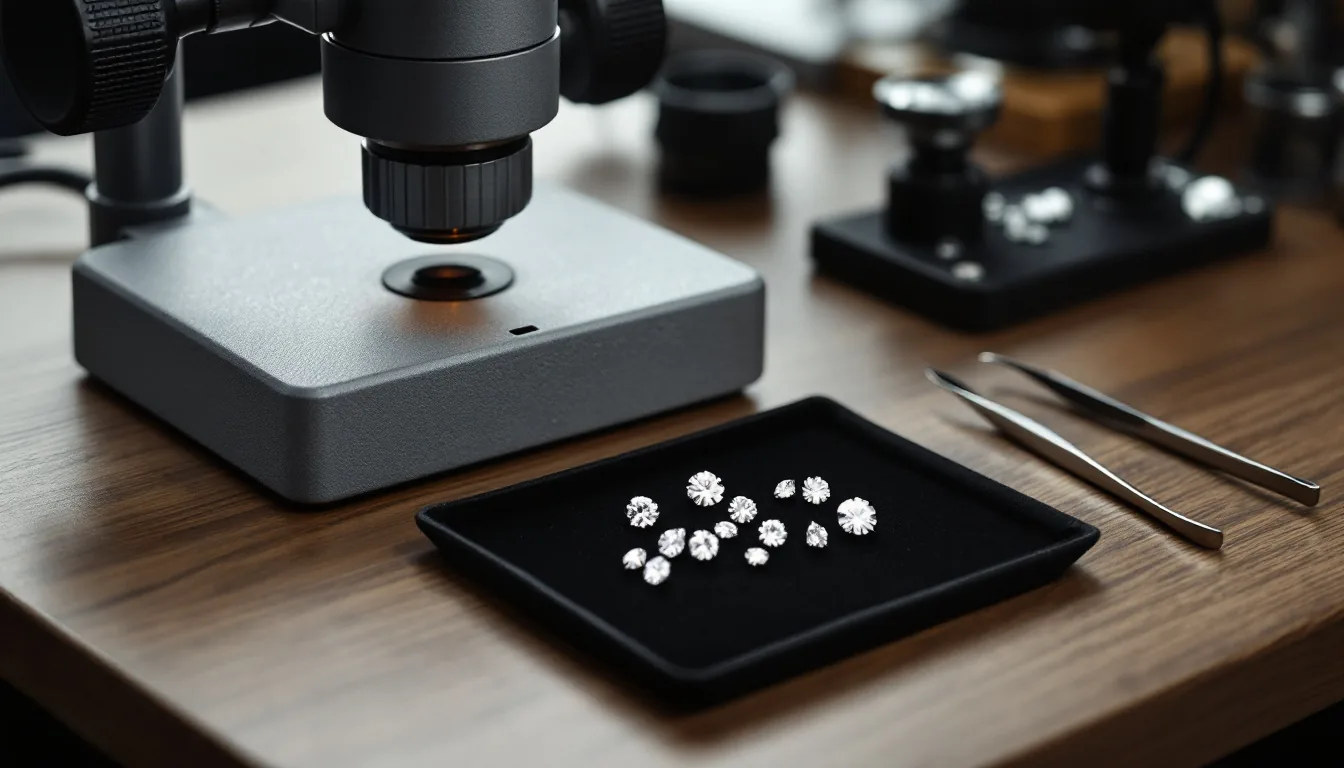
A diamond’s color grade measures how close it is to colorless, on a scale that runs from D (colorless) to Z (light yellow, brown or gray). GIA splits the 23 letters into five groups: colorless (D to F), near colorless (G to J), faint (K to M), very light (N to R) and light (S to Z). Grades are set by comparing the stone, face down, against a set of masterstones under controlled light.
The D-to-Z scale by group
The GIA color scale describes the normal color range of diamond, which GIA says runs from colorless to light yellow, light brown or light gray. Most “white” diamonds carry faint hints of yellow or brown, and the grade records how much.
| Grades | GIA group | What GIA says about visibility |
|---|---|---|
| D, E, F | Colorless | The most chemically pure diamonds in the range |
| G, H, I, J | Near colorless | Color often unnoticeable except to trained graders |
| K, L, M | Faint | Color still difficult for the untrained eye to see |
| N, O, P, Q, R | Very light | Color can be seen in larger stones by an untrained eye |
| S to Z | Light | Color visible in many sizes; stones look distinctly yellow or brown |
The group descriptions come from GIA’s guide to the color grade on its reports. Because the scale measures the absence of color, a lower letter means a higher grade, and GIA notes that differences in grade can have a significant effect on price.
Why the scale starts at D
GIA says it began its scale at D to avoid confusion, comparison or association with earlier grading systems.
How color is graded
Color grading is a comparison, not a reading from a meter. GIA describes the setup:
- Lighting. The diamond is examined under a daylight-fluorescent light source, against a neutral gray background, so room light and surroundings do not affect the result.
- Tray. The stone sits in a white, non-reflective grading tray.
- Face down. The diamond is placed with its table facing down, so the grader looks at the stone through the pavilion rather than at its face-up sparkle.
- Masterstones. The grader compares the diamond to each masterstone in a set of known color grades until finding a match.
Because grading is done loose and face down, a color grade on a report describes the diamond itself. What the wearer sees face up in a ring can look different, for the reasons below.
Fluorescence
Fluorescence is visible light some diamonds emit when exposed to invisible ultraviolet (UV) rays. GIA’s fluorescence notes put the share of diamonds submitted to it that show some fluorescence at about 25 to 35 percent, with only about 10 percent reaching medium, strong or very strong. Blue is by far the most common color, seen in more than 95 percent of fluorescent diamonds.
GIA reports fluorescence as None, Faint, Medium, Strong or Very Strong, separately from the color grade. Fluorescence does not change the color grade, but it can change how a diamond looks under light with UV in it.
- Lower colors. A 2021 GIA study found that lower-color diamonds with medium to very strong blue fluorescence may appear up to one color grade better face up.
- Haziness. The same study found that fluorescence alone does not noticeably reduce transparency; haziness comes mainly from structural defects in the crystal. GIA says fewer than 0.2 percent of fluorescent diamonds look hazy or oily.
- Durability. A fluorescent diamond has the same integrity as one with no reaction to UV.
Setting metal and face-up color
Diamonds act like small mirrors and pick up the color of what surrounds them, including the mounting. GIA’s setting guide gives practical pairings:
| Color grade | Suggested metal | Why |
|---|---|---|
| D to J | Platinum or white gold | White metal keeps the icy look; yellow prongs can make the stone look a different grade |
| K to Z | Yellow or rose gold, or white for contrast | Yellow gold accentuates the warmth; a white band can make the stone appear more colorless |
| Fancy colors | Often white metal | The white band highlights the diamond’s color |
For the metals themselves, see Platinum in Jewelry and Gold Karats Explained.
Fancy color diamonds
GIA defines fancy color as any diamond with color outside the normal D-to-Z range. That means stones with more color than the Z masterstone, or with a color other than yellow, gray or brown. Pink and yellow are popular, while green and blue are especially prized and rare.
Fancy colors use a separate GIA system that judges hue, tone and saturation instead of letters. A GIA guide to yellow diamonds lists the intensity terms, running from Faint through Fancy Light, Fancy, Fancy Intense and Fancy Vivid, with Fancy Dark and Fancy Deep for darker stones. Stronger, more saturated color is worth more, and Fancy Vivid is the most prized. A deep yellow diamond past Z is therefore not a “low” color but a fancy yellow, valued on different terms.
Buying notes
- Near colorless often looks colorless. In the G to J range, GIA notes color is often unnoticeable except to trained graders.
- Size matters. GIA’s own descriptions say color becomes visible in larger stones sooner than in small ones.
- Weigh color against clarity. Most buyers trade one off against the other; the Diamond Clarity Chart covers the clarity side.
- Ask how it was viewed. The 2021 GIA study stressed that the UV content of the light changes how fluorescent stones look, so compare stones under the same lighting.
Lab-grown stones
Since October 1, 2025, GIA no longer gives lab-grown diamonds D-to-Z grades. Its “Premium” category requires D color, and “Standard” covers E to J. Other laboratories may still use letter grades. The details are in Lab-Grown vs Natural Diamonds.
Common questions
Can I see the difference between a G and an H? Usually not without masterstones. GIA describes near-colorless color as often unnoticeable except to trained graders, which is why the comparison is done table down under controlled light.
Is strong blue fluorescence a defect? No. GIA reports it separately from color, and its research found most fluorescent diamonds show no widely noticeable effect. Fewer than 0.2 percent appear hazy.
Why does my diamond look whiter in some rooms? Lighting and surroundings change face-up appearance. Light with UV can make blue-fluorescent stones look whiter, and white metal around the stone has a similar effect.
Further reading
- GIA 4Cs: Diamond Color
- GIA 4Cs: GIA Diamond Grading Reports: Understanding the Diamond Color Grade
- GIA 4Cs: More Info About Fluorescence
- Gems & Gemology (Summer 2021): Measurement and Characterization of the Effects of Blue Fluorescence on Diamond Appearance
- GIA 4Cs: Diamond Engagement Ring Setting: How Metal Affects Diamond Color Appearance
- GIA 4Cs: Yellow Diamond Buying Guide