Gold Karats Explained: 10K, 14K, 18K and 24K Compared
What 24K, 22K, 18K, 14K, 10K and 9K mean in gold content and stamps, how US marking rules work, and how karat affects color, wear and allergies.
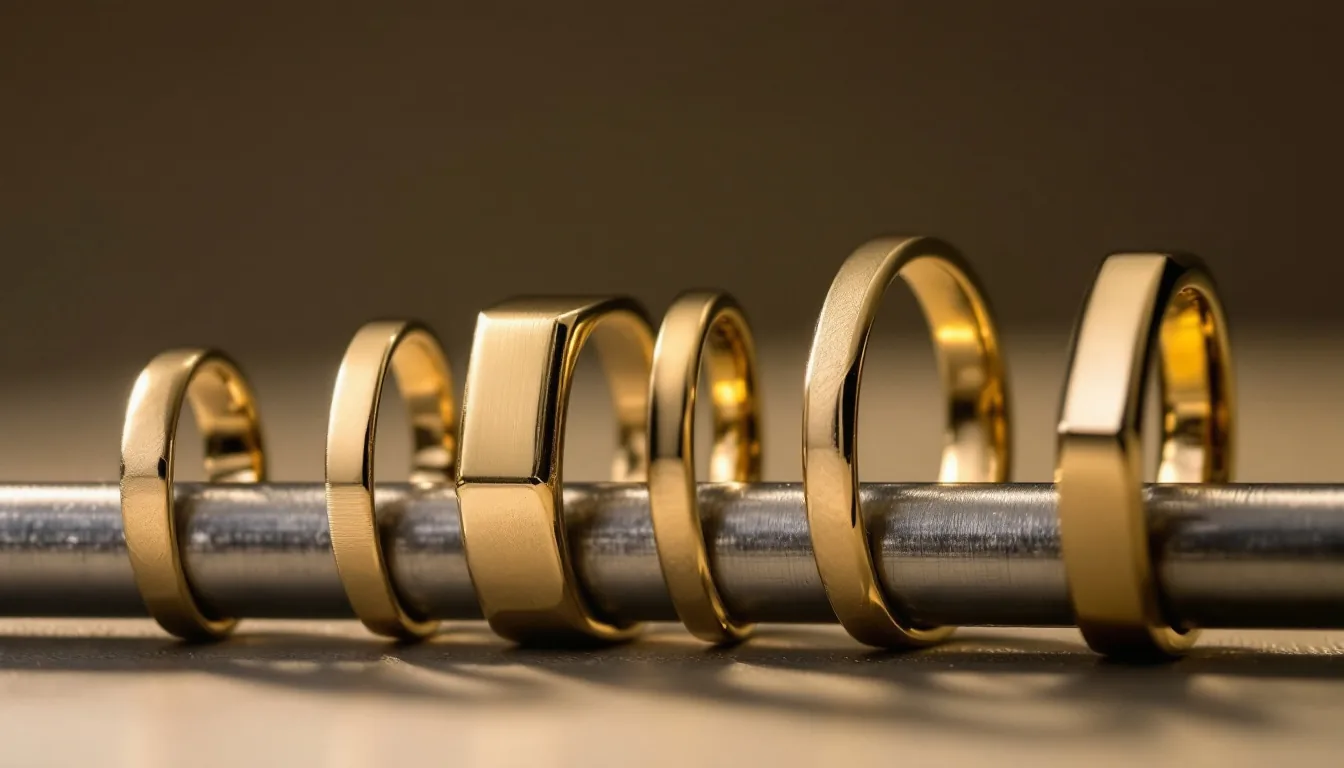
A karat is one part in 24, so the karat number says how much of the metal is pure gold: 24K is pure gold, 18K is 18 parts gold in 24 (75 percent) and 14K is 14 parts in 24 (58.3 percent). The rest is alloy metal, usually silver, copper, zinc, palladium or nickel, which makes the gold harder and sets its color. Higher karats cost more and are softer. Lower karats carry more alloy metal, which raises the chance of a skin reaction in sensitive wearers.
Karat, fineness and stamps
Outside the US, gold content is usually stamped as fineness, the parts per thousand of pure gold. The World Gold Council lists the common figures below, and the UK assay offices recognize 999, 990, 916.6, 750, 585 and 375 as legal gold standards.
| Karat | Parts gold in 24 | Gold content | Common fineness stamp |
|---|---|---|---|
| 24K | 24 | Pure gold | 999 |
| 22K | 22 | 91.7% | 916 |
| 18K | 18 | 75% | 750 |
| 14K | 14 | 58.3% | 585 (sometimes 583) |
| 10K | 10 | 41.7% | 417 |
| 9K | 9 | 37.5% | 375 |
The 14K figure is 583 by straight arithmetic. The World Gold Council lists both 583 and 585, and 585 is the standard the UK assay offices use. A US piece is more often stamped with the karat itself, such as “14K” or “14Kt,” and may carry both. How to read the full range of marks, including UK hallmarks, is covered in Jewelry Hallmarks and Quality Marks.
US marking rules in plain English
The FTC Jewelry Guides (16 CFR 23.3) and the National Gold and Silver Stamping Act set the main rules. This is a summary, not legal advice.
- “Gold” on its own means 24 karat. The unqualified word may not be used for anything that is not fine gold throughout.
- Alloys may be called gold only when an accurate karat mark of equal prominence comes immediately before the word, as in “14 Karat Gold,” “14 K. Gold” or “9 Kt. Gold.” The karat alone, such as “14K,” is also acceptable.
- No more 10K floor. Earlier versions of the Guides advised against calling anything under 10 karat “gold.” The 2018 final revisions removed that threshold, so a gold alloy above or below 10 karats may use gold terms if an accurate karat disclosure goes with it. The 10 karat minimum still applies to the gold used in gold plate, gold filled and vermeil.
- Hollow pieces should be disclosed, for example “14 Karat Gold-Hollow Center,” and should not be called “solid.”
- Plated items may not be described as gold without a qualification showing that only the surface is gold. The plated and filled terms are explained in Gold Plated vs Gold Filled vs Vermeil.
- Rhodium. A separate section, 16 CFR 23.7, says sellers should disclose a rhodium surface layer on products described as precious metal, which covers most white gold.
Tolerances
Under the Stamping Act (15 U.S.C. 295), a gold part tested without solder may fall short of its mark by no more than three parts per thousand. When the whole article is assayed together with its solder, the allowance is seven parts per thousand for most jewelry and three for watchcases and flatware. A separate provision requires a manufacturer or importer who applies a gold quality mark to put a registered trademark or its name beside it, so the mark can be traced.
Color: yellow, white and rose
Pure gold has one color. The alloy metals produce the rest.
- Yellow gold is alloyed mainly with silver and copper, often with a little zinc.
- White gold uses white metals. GIA lists nickel, palladium and zinc; the World Gold Council lists palladium or silver. Most white gold is plated with rhodium for a whiter, brighter surface, and GIA notes that as the plating wears the ring may start to look warm in color and need replating.
- Rose gold gets its color from copper. According to GIA, the more copper, the pinker the metal, which is why a lower-karat rose gold often shows a stronger pink.
GIA gives these typical rose gold compositions:
| Rose gold | Gold | Silver | Copper |
|---|---|---|---|
| 22K | 91.7% | 0% | 8.4% |
| 18K | 75% | 9.2% | 22.2% |
| 14K | 58.3% | 9.2% | 32.5% |
Durability and color trade-offs
Pure gold is soft. GIA describes 24K as the purest and softest, and more prone to scratches and dents, and rates it unsuitable for a ring worn every day. Alloying gives the metal more strength, so 14K and 18K are the usual choices for rings. GIA also notes that rose gold is stronger and more durable than yellow gold of the same karat.
Color pulls the other way. In rose gold, the extra copper in a lower karat strengthens the pink, and in every color a higher-karat piece costs more for the same weight, since a larger share of the metal is gold.
Allergies
GIA’s ring material table rates 24K gold as no allergy risk. Reactions usually come from the alloy metals, and GIA calls nickel a common allergen. GIA advises people allergic to copper or nickel to avoid gold alloys containing them and consider platinum, and suggests white gold alloyed with palladium, or nickel-free yellow and rose gold, for sensitive skin. A plated white gold ring may cause no reaction until the rhodium wears through and the alloy underneath touches the skin. Anyone with a known allergy should ask the seller for the alloy’s full composition, not just the karat. Platinum and palladium are compared with white gold in Platinum in Jewelry and Palladium in Jewelry.
10K vs 14K vs 18K
| 10K | 14K | 18K | |
|---|---|---|---|
| Gold content | 41.7% | 58.3% | 75% |
| Typical stamp | 10K, 417 | 14K, 585 | 18K, 750 |
| Everyday wear (GIA) | Not rated by GIA | Suitable; little or no upkeep | Suitable; may need occasional polishing |
| Allergy risk (GIA) | Not rated by GIA; highest share of alloy metal | Possible | Unlikely |
| Price per gram | Lowest | Middle | Highest |
The “everyday wear” and “allergy” entries for 14K and 18K follow GIA’s ring material table. For 10K, the entries describe the alloy’s make-up rather than a GIA rating.
Common questions
Is 9K gold real gold? Yes. It is 37.5 percent gold. In the US it may be called “9 Karat Gold” or “9 Kt. Gold” as long as the karat is stated, and in the UK it is hallmarked as 375.
Why does my 14K ring say 585 instead of 583? Fourteen twenty-fourths works out to 583 parts per thousand. Both numbers appear on 14K jewelry, but 585 is the figure the UK assay offices use as the legal standard.
Does higher karat mean better? Not for every use. 18K has more gold and a deeper color, but 14K is harder-wearing and cheaper. For a ring worn every day, both are common choices.
Further reading
- FTC Jewelry Guides, 16 CFR 23.3: Misrepresentation as to gold content
- Federal Register, 16 August 2018: Guides for the Jewelry, Precious Metals, and Pewter Industries (final revisions)
- 15 U.S.C. 295: Standard of fineness of gold articles; deviation (National Gold and Silver Stamping Act)
- World Gold Council: Gold Jewellery: Colour, Carat and Purity
- GIA 4Cs: Rose Gold vs. Yellow Gold
- GIA 4Cs: Best Ring Material for Everyday Wear